
DGFI 2026 Takeaways: Georgia's Digital Finance Market Enters Its Next Stage
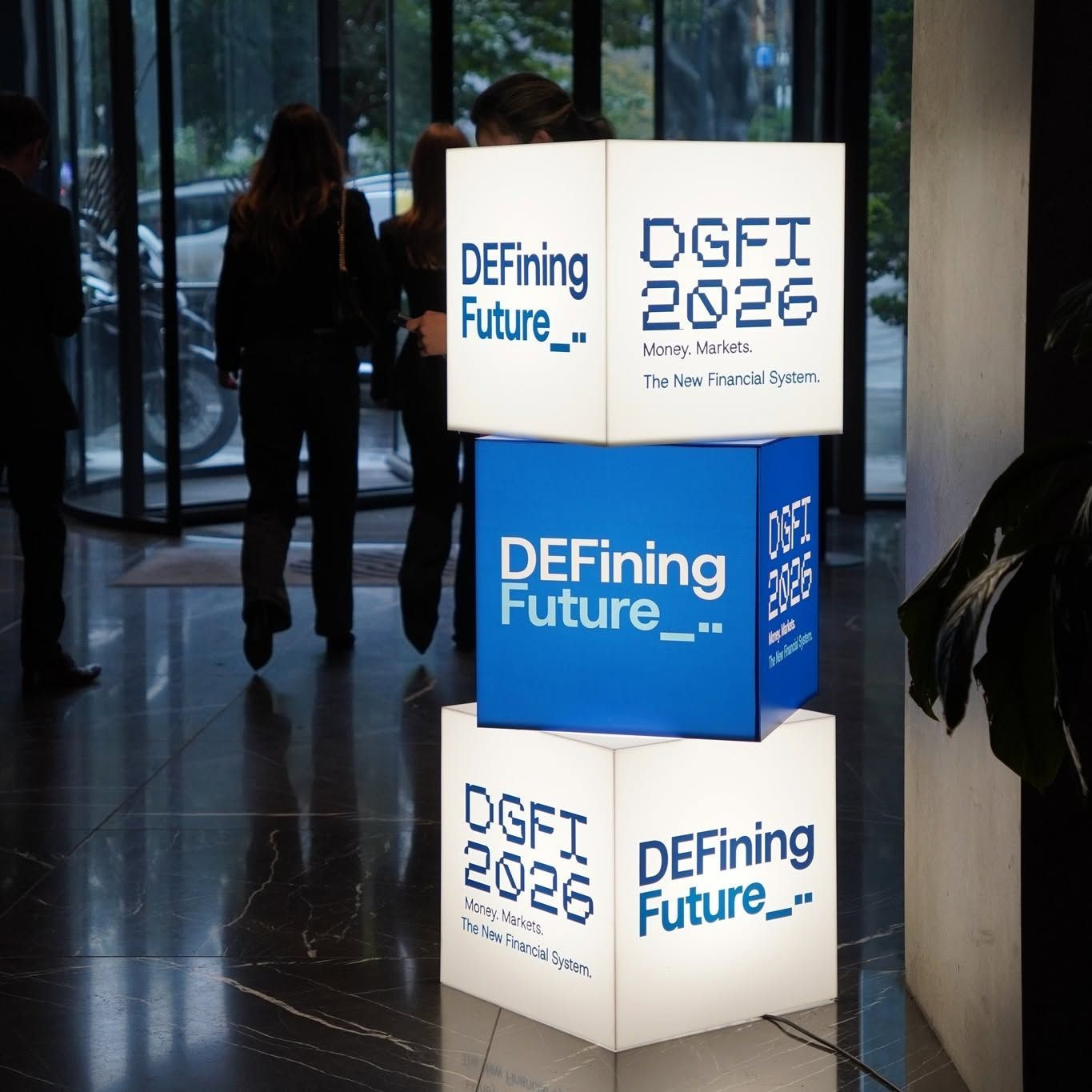
On 30–31 October, Pullman Tbilisi Axis Towers hosted DGFI 2026, the fifth edition of the regional digital finance conference. More than 100 speakers and over 80 partners took part, from Tether, Binance, Polygon Labs and Mastercard to Georgian banks and local companies such as CityPay and GeCrypto. Behind dozens of sessions on stablecoins, payments and regulation stood a few shared ideas about where the market of the Caucasus and Central Asia is heading.
The region is growing, and the pace is picking up
The opening address by Nino Jeladze, Vice Governor of the National Bank of Georgia, gave the numbers behind this mood. About a third of foreign direct investment in Georgia in 2025 went into the financial sector. Three digital banks already operate under a licence, more than 40 virtual asset service providers are registered, including international operators, and a separate framework now covers stablecoin offerings. Speakers from the NBG and Mastercard expect growth to accelerate, with neighbouring markets following Georgia.
The calendar told a similar story. DGFI opened days after the Tbilisi Finance Summit, organised by the NBG together with the Ministry of Economy and the Singapore-based Global Finance & Technology Network. Global players were visible on the DGFI stage as well: Tether, Binance and Polygon Labs gave keynotes, and a separate session covered GEL₮, a lari-linked stablecoin.
In Georgia, crypto has become routine
A recurring observation was that Georgia has moved past the debate about whether to accept crypto. A few years ago, turning digital assets into money often meant P2P deals with strangers, the risk of a blocked card and uncomfortable questions from the bank about where the funds came from. Today, for most users, it is an ordinary financial operation.
Regulation laid the groundwork. Since July 2023, only providers registered with the NBG may offer virtual asset services, and since January 2026 every registered VASP must display its registration confirmation in offices, on websites and in apps, so a client can check a provider in a minute. In September 2026 the NBG went further, setting minimum supervisory capital of GEL 150,000 for exchange services and new risk management and cybersecurity standards, with existing providers given until 2027 to comply. The public registry will also show exactly which services each company is authorised to offer.
The other half of the work was done by licensed exchanges. They took over the checks that banks used to put to clients themselves: identity verification, AML screening of wallets and confirmation of the source of funds. Every deal now comes with a receipt and a set of documents, so a client can sell crypto to a Georgian bank account and receive lari, dollars or euros at Bank of Georgia, TBC or another local bank. For the bank, such a transfer arrives with a clear, documented history, and that is what turned a grey-zone operation into a routine one.
Banks and payment companies are adjusting too. Executives from Silk Bank, PASHA Bank and TBC discussed how banks are repositioning in a changing financial system, and on the second day CityPay, Wolt and Hive Pay talked about digital payments in everyday use. Bybit's card launch in Georgia in March 2026 fits the same picture.
VASPs are moving beyond exchange
This was the central question of the VASP panel "Beyond Trading: The New Role of Digital Asset Service Providers" with Yaroslav Bulatov of GeCrypto, Vakho Tchitava of Fastoo, Otabek Nasirov of the Central Asian Fintech Association and Karen Zakaryan of Armenia's FINARM, moderated by Sonny Verueco.
The starting point is simple. When buying and selling crypto is available everywhere and margins keep shrinking, the exchange itself no longer gives a client a reason to choose one provider over another. Clients come with tasks: receive a payment from abroad, pay a supplier, pay salaries, move savings or close a property deal. They care about the result far more than the technology behind it, and the provider that handles the whole task keeps the relationship.
That is why the leading VASPs are moving toward full-scale fintech. The main directions are access to global payment rails, cross-border payments for business, banking services such as accounts and IBANs, and crypto cards for everyday spending. Each step raises the bar on trust, so the panel also looked at what it takes for banks and other institutions to treat a VASP as a long-term partner: governance, compliance and stable banking relationships.
The path of GeCrypto shows how this looks in practice. The company opened in 2022 as a Tbilisi exchange office turning USDT into cash, was among the first entries in the NBG's VASP register in October 2024 and, by industry estimates, took about 20% of the domestic exchange market within six months. Today its clients receive funds at Bank of Georgia, TBC and other local banks or abroad via SWIFT, SEPA and ACH, while businesses use the company for treasury conversions and stablecoin settlement of foreign invoices. Next on its roadmap are deeper integration with Georgian banks, a dedicated B2B product and services that connect crypto with the real estate market.
Cross-border cooperation comes next
The regional make-up of the panel shaped its final part. Participants from Armenia and Uzbekistan stressed their interest in working across the region, since their markets face similar tasks: linking digital assets with local banking and serving clients who move money between countries.
The timing is right. Armenia launched a licensing regime for crypto service providers in January 2026, built on the EU's MiCA approach, while Georgia has run its registration system since 2023 and already has practical experience to share. Nasirov, whose association is based in Tashkent, has previously spoken of significant untapped potential for mutual fintech investment between Central Asia and the Caucasus. Georgia, with a working regime and licensed operators already connected to banks and international rails, is a natural partner in that process.